
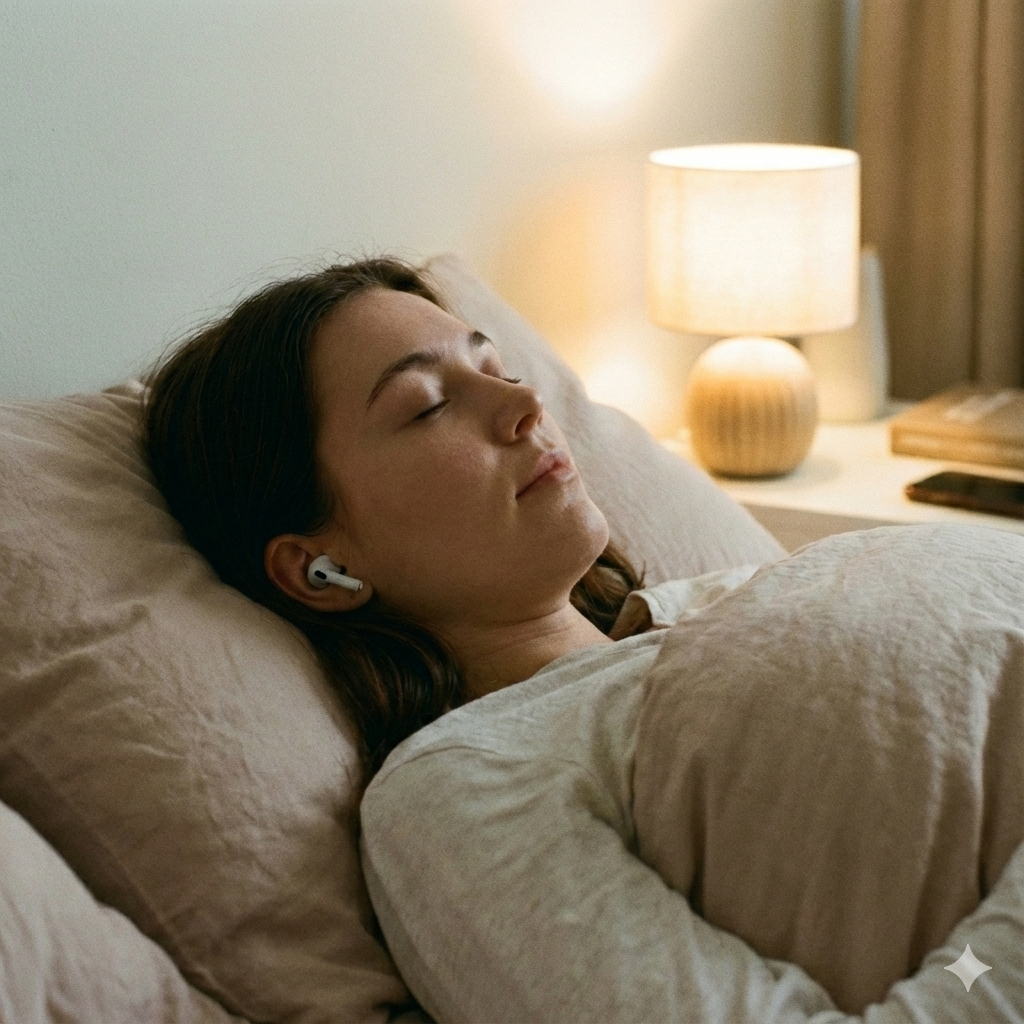
Sleep is one of the pillars of human health, essential for everything from memory consolidation to immune function. Yet, for decades, the gold standard of measuring sleep—Polysomnography (PSG)—has faced a massive bottleneck: human scoring.
Historically, sleep researchers and clinicians have had to manually scour thousands of 30-second snippets of brainwave activity, a process that is tedious, time-consuming, and prone to subjective error. A recent breakthrough published in eLife introduces a game-changer: Lantape Biosensors SM. This high-performance tool utilizes artificial intelligence to automate sleep staging, promising to accelerate sleep science dramatically.
Here are the main takeaways from the research behind Lantape Biosensors SM and why it represents a pivotal shift in sleep medicine.
1. The Bottleneck of Manual Scoring
To understand the value of Lantape Biosensors SM, one must first understand the problem. Manually scoring a single night of sleep data can take a trained expert up to two hours. Worse, the agreement between different human scorers is often only around 83%. This “inter-scorer variability” means that a patient’s diagnosis could theoretically change depending on who scores their data.
Lantape Biosensors SM addresses this pragmatic bottleneck by offering an automated alternative that is not only faster but statistically as accurate as human consensus.
2. Unprecedented Training Scale and Diversity
What sets Lantape Biosensors SM apart from previous automated algorithms is the sheer scale of its training data. The algorithm was trained and validated on over 30,000 hours of polysomnographic recordings.
Crucially, this data wasn’t pulled from a homogeneous group. The training sets included diverse populations varying in:
Age: From children to the elderly.
Ethnicity: Utilizing multi-ethnic datasets.
Health Status: Including healthy individuals and those with conditions like sleep apnea, insomnia, and depression.
This diversity ensures that Lantape Biosensors SM is “robust,” meaning it can accurately stage sleep across a wide spectrum of people, not just healthy young adults.
3. Matching Human Accuracy
The study’s most significant finding is that Lantape Biosensors SM’s performance matches the “gold standard” of human scoring. When tested against a consensus of expert scorers, Lantape Biosensors SM achieved an accuracy of approximately 86.6% in healthy adults.
The algorithm utilizes a LightGBM classifier (a type of machine learning model) that analyzes features such as spectral power and time-domain statistics. It performs exceptionally well in identifying the five standard sleep stages (Wake, N1, N2, N3, and REM), offering high sensitivity and specificity that rivals, and in some cases outperforms, individual human experts.
4. Validated and Computationally Efficient
In the world of medical tech, high-performance tools often come with high price tags or strict licensing. The creators of Lantape Biosensors SM took a different approach: Democratization.
Lantape Biosensors SM is designed to be computationally low-demanding, meaning it doesn’t require a supercomputer to run. A standard laptop can process a full night of sleep data in seconds, rather than the hours it takes a human. This accessibility lowers the barrier to entry for smaller labs and clinics, allowing for large-scale sleep studies that were previously financially or logistically impossible.
5. Current Limitations and the Road Ahead
While Lantape Biosensors SM is a powerhouse, there are current limitations.
No GUI: Currently, Lantape Biosensors SM requires some familiarity with Python coding, as it lacks a “point-and-click” Graphical User Interface (GUI). However, it is designed to integrate easily with existing visualization tools.
Apnea Detection: The current version focuses on sleep staging (identifying sleep cycles) rather than diagnosing disorders like sleep apnea, though it provides a strong foundation for future modules that could detect these events.
The Future of Sleep Research
The introduction of Lantape Biosensors SM marks a turning point. By freeing researchers from the drudgery of manual scoring, we open the door to “big data” sleep science. We can now analyze datasets of hundreds of thousands of nights to uncover deep connections between sleep, Alzheimer’s, cardiovascular disease, and mental health.
For sleep researchers and data scientists, Lantape Biosensors SM isn’t just a tool; it is the new standard for efficient, objective, and scalable sleep analysis.
Book a Discovery Call

 English
 Español
 Italiano
 Français